
ONLINE INSIGHT SESSION
Date: Wednesday 8 July 2026
Time: 11:00 – 12:00 CEST
Language: English – French simultaneous translation
----
How can forests be planted sustainably in urban areas with chronically low precipitation and/or heat waves?
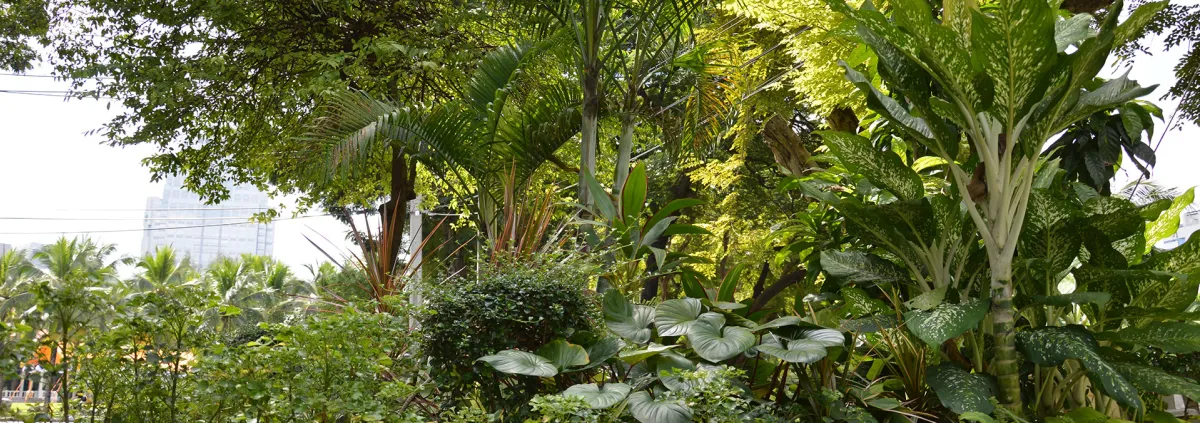
The Miyawaki-Method is a reforestation technique which has become popular in recent years due to its efficiency in growing vegetation in small urban spaces within a very short time period. In order to accelerate growth, the method builds on three key principles: The exclusive use of native plant species that are used to the soil; which are planted in extreme density; and form a multi-layered ecosystem featuring canopy, sub-canopy, shrubs and ground cover tiers. A videographic overview of the Miyawaki-Method can be found here.
Not only can micro forests serve as cooling green corridors in urban geographies; they may also be classified as nature-based solutions, which are essential for various ecosystem services, not least disaster prevention. According to the method’s founder Dr. Akira Miyawaki, native forests are nearly thirty times more resilient and offer protection against natural disasters compared to non-native species.
While the Miyawaki-Method has been developed in Japan in the 1970s, it only recently has become to spread globally, with many applications in India but also growing popularity in Europe, North America and other parts of the world. However, as droughts become more frequent around the globe, watering-intensive Miyawaki afforestation may also face increasing difficulties in implementation. Can Urban Micro Forests therefore be considered a suitable intervention and nature-based solution in municipalities affected by frequent drought – for instance across Africa and the Middle East?
The MIYA-forest network from Eberswalde, Germany is one recent example of civil society-led practices to spread tiny forests according to the Miyawaki-method, both in Germany and the MENA region. In this ConnectiveCities Insight session, Board Member Stefan Scharfe will present the association’s best practices, which—in addition to planting more than 40 micro-forests since 2021—also include educational and scientific work.
As our second speaker, Deema Assaf from the Tayyun research and ecological design studio from Amman will share experiences on planting Miyawaki forests. The architect pioneered the Miyawaki method in Jordan by establishing the Arab world’s first Miyawaki forest in a 107 m² garden in Amman in 2018, planting 380 saplings of 23 native species.
Based on the thematic fits, participants of the current ConnectiveCities learning processes on ‘Green Corridors in the City and its Surroundings’ (MENA network) as well as ‘Nature at the Heart of Urban Resilience’ (SubSahara Africa network) are particularly encouraged to join the discussion and contribute own experiences of urban reforestation in dry areas.
We look forward to welcome you in our discussion!